
Technology Trend
Intelligent visibility and the road to software-defined lighting
Five chapters on how automotive lighting is becoming an intelligent, software-driven system — and what that means for perception, active safety, and future mobility.
Strategic Purpose
This section explores the technological evolution shaping the future of intelligent automotive lighting and its growing role in vehicle perception, active safety, and intelligent mobility. It presents global industry developments, emerging engineering concepts, and next-generation technologies that are redefining lighting as an intelligent, software-driven system. By connecting advances in optics, embedded electronics, computer vision, and ADAS, it reflects Modern Group's vision of intelligent visibility and demonstrates how innovation in lighting is enabling safer, smarter, and more connected vehicles.
Chapter 01
The Evolution of Intelligent Visibility
Intelligent Visibility: Beyond Illumination
Modern vehicles require lighting systems that do more than illuminate the road. Intelligent visibility combines advanced optics, embedded electronics, software, and environmental awareness to deliver adaptive illumination based on driving conditions, vehicle dynamics, and surrounding traffic. By optimizing where, when, and how light is distributed, intelligent lighting improves driver confidence, enhances safety, and prepares vehicles for increasingly automated driving functions.
Driving Innovation
The next generation of lighting technologies is driven by the convergence of intelligent electronics, camera-based perception, and software-defined vehicle architectures. As Advanced Driver-Assistance Systems become increasingly dependent on reliable visual information, lighting plays a critical role in improving scene visibility, supporting perception algorithms, and enabling safer operation under diverse environmental conditions. At the same time, advances in embedded computing, connectivity, and energy-efficient LED technologies continue to redefine the capabilities of automotive lighting systems.
Technology Evolution
The evolution of automotive lighting reflects the industry's continuous pursuit of greater safety, efficiency, and intelligence.
- 01Conventional Halogen and Xenon systems provided fixed illumination with limited adaptability.
- 02Adaptive Front-lighting Systems (AFS) introduced dynamic beam steering to improve visibility on curved roads.
- 03Matrix LED technology enabled independently controlled light segments, allowing glare-free high-beam operation while maintaining maximum road illumination.
- 04High-Definition Matrix Lighting further increased beam precision through hundreds of controllable pixels, enabling selective illumination and dynamic light distribution.
- 05Predictive Smart Lighting integrates vehicle data, cameras, and intelligent control algorithms to proactively adapt illumination to the driving environment.
This progression demonstrates the transition from hardware-based lighting to intelligent, software-controlled visibility systems.
Technology Progression
From conventional illumination to intelligent, adaptive systems, automotive lighting continues to evolve with technology and the future of mobility.
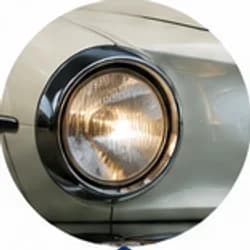
Halogen
Basic Illumination
1970s – 1990s
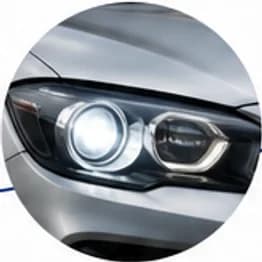
HID / Xenon
Higher Intensity
1990s – 2000s
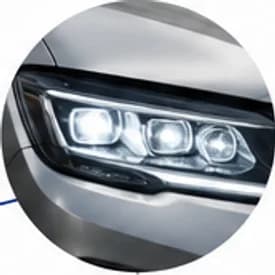
LED
Efficiency & Design
2000s – 2010s
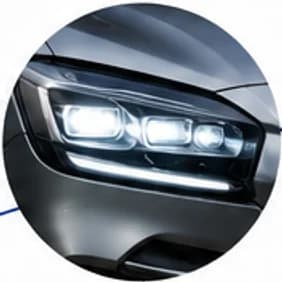
Adaptive LED
Dynamic Adaptation
2010s – 2020s
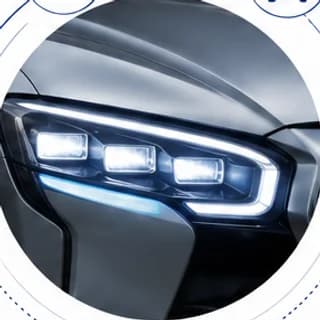
Intelligent Lighting
Perception. Adaptation. Communication.
2020s and Beyond
Intelligent lighting is shaping safer roads, smarter vehicles, and better experiences.
Chapter 02
Lighting as an Enabler of ADAS
Advanced lighting systems enhance perception, communicate intentions, and work together with ADAS to create safer, smarter driving experiences.
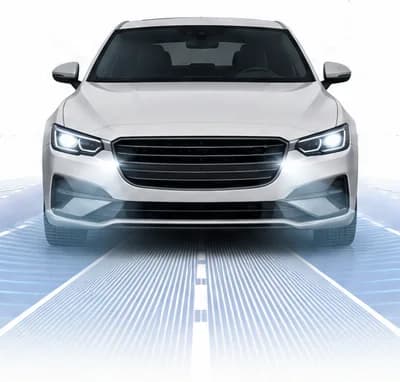
- Enhanced Visibility & Safety
- Lane Detection & Tracking
- Object Detection & Recognition
- Traffic Sign Recognition
- Driver Assistance & Automation
What This Delivers
See Further
Improved visibility in all conditions
Communicate Better
Clearer signals and intentions to others
Drive Safer
Better perception leads to safer decisions
Enable Automation
Lighting and ADAS working together for the future
Intelligent lighting is not just about illumination: it is a key enabler of advanced driver assistance and the future of mobility.
Lighting and Vehicle Perception
Camera-based ADAS systems depend on high-quality visual information to recognize lanes, vehicles, pedestrians, traffic signs, and other road users. Intelligent lighting enhances scene visibility by adapting illumination to driving conditions, minimizing glare, and improving image quality under low-light environments. Rather than operating independently, lighting and perception systems work together to provide a more accurate understanding of the surrounding environment.
A Shared Vision Platform
Modern intelligent lighting systems increasingly rely on a common perception platform capable of supporting multiple vehicle functions simultaneously. A single camera and perception engine can perform object detection, lane detection, semantic scene understanding, and light source recognition while providing information to both ADAS functions and intelligent lighting algorithms.
This shared architecture improves system scalability, reduces development complexity, and establishes a reusable technology platform for future vehicle programs.
Supporting Camera-Based ADAS
Camera-based ADAS offers an effective balance between functionality, system complexity, and development cost, making it an ideal platform for next-generation intelligent lighting integration. A shared perception engine enables multiple vehicle functions to utilize the same visual information, increasing system efficiency while reducing hardware redundancy.
Through this integrated architecture, intelligent lighting enhances the performance of key ADAS functions, including:
- 01Glare-Free High Beam (GFHB) through continuous detection of oncoming and preceding vehicles.
- 02Lane Departure Warning (LDW) by improving lane-marking visibility during nighttime driving.
- 03Traffic Sign Recognition (TSR) through optimized illumination of retroreflective traffic signs.
- 04Forward Collision Warning (FCW) by increasing object visibility under low-light conditions.
- 05Adaptive Lighting Functions using real-time scene understanding to dynamically adjust beam distribution.
Chapter 03
Engineering Light for Perception
Optical Engineering for Intelligent Visibility
Effective automotive lighting begins with precise optical engineering. Lens design, reflector geometry, LED configuration, and thermal management must operate as an integrated system to achieve uniform light distribution, maximize illumination efficiency, and comply with international photometric regulations. Advanced optical design enables greater beam precision while minimizing glare and improving visibility in diverse driving environments.
Lighting Optimized for Machine Perception
As camera-based ADAS becomes increasingly prevalent, lighting must be designed not only for the human eye but also for machine vision. Optimized beam patterns improve image quality, increase object contrast, and enhance the reliable detection of lanes, pedestrians, vehicles, and traffic signs under challenging environmental conditions. Intelligent illumination therefore becomes an essential contributor to perception accuracy and overall system reliability.
Shared Vision Technologies
Modern intelligent lighting systems benefit from a unified perception architecture in which a single vision platform supports multiple vehicle functions. Advanced computer vision technologies — including object detection, lane detection, semantic segmentation, traffic sign recognition, and light source detection — provide real-time environmental understanding that simultaneously supports adaptive lighting functions and camera-based ADAS. This shared approach improves computational efficiency, promotes technology reuse, and enables scalable system development.
Shared Vision Technologies
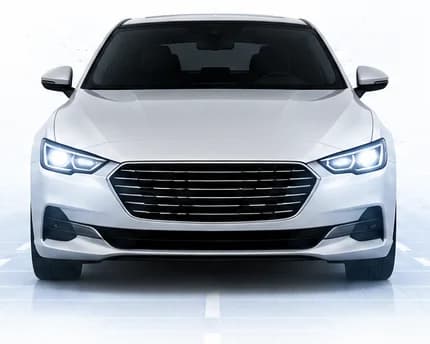
- Semantic Segmentation
- Object Detection
- Lane Detection
- Traffic Sign Recognition
- Light Source Detection
Shared Perception Pipeline
Perception Input
Camera & sensors capture the environment
Unified Vision Platform
Real-time processing & understanding
System Outputs
Adaptive lighting & ADAS functions
Chapter 04
From Hardware to Software-Defined Lighting
Intelligent Electronic Architecture
High-performance electronics enable real-time control and seamless communication.
Modern lighting systems are built on high-performance electronic platforms that integrate microcontrollers, power management circuits, LED drivers, and high-speed vehicle communication networks. This architecture enables real-time control of lighting functions while providing seamless communication with vehicle ECUs, cameras, and other intelligent systems. A modular electronic design also supports scalability across different vehicle platforms and lighting applications.
Software-Driven Lighting Intelligence
Advanced algorithms adapt light distribution in real time for optimal performance.
Advanced lighting functionality is increasingly defined by software rather than dedicated hardware. Embedded control algorithms continuously calculate optimal light distribution by processing information from vehicle speed, steering angle, camera perception, ambient conditions, and driver inputs. Functions such as Glare-Free High Beam, Adaptive Front Lighting, Dynamic Bending Light, and thermal management are executed through software, enabling greater flexibility, improved performance, and continuous feature enhancement throughout the vehicle lifecycle.
Scalable Platform Architecture
Reusable software and hardware platforms enable rapid development and easy scalability.
A reusable software platform enables multiple intelligent lighting functions to operate on a common electronic architecture. Standardized software modules, application components, and communication interfaces reduce development effort, simplify validation, and accelerate the introduction of new technologies. This scalable approach supports efficient product evolution while maintaining compatibility with future lighting functions and vehicle programs.
Reliable and Secure Operation
Built-in diagnostics, functional safety, and secure communication ensure dependable performance.
As lighting systems become increasingly connected, reliability and functional safety become fundamental design requirements. Robust diagnostics, secure communication, functional safety principles, and software validation ensure dependable system performance under all operating conditions. Compliance with modern automotive software architectures also prepares lighting platforms for future over-the-air updates and software-defined vehicle ecosystems.
Platform Architecture
Software Layer
TIER 01- Application Software
- Control Algorithms
- Diagnostics & Security
Electronic Platform
TIER 02- Microcontroller
- Power Management
- LED Drivers
- Communication Interfaces
Hardware Foundation
TIER 03- LED Modules
- Sensors
- Power Stage
- Connectors
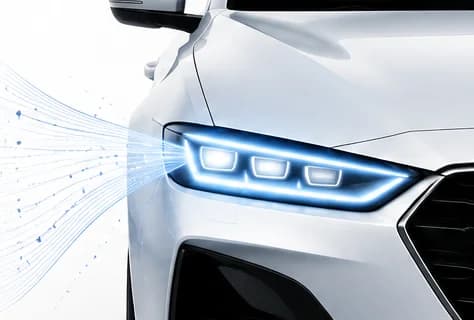
Integrated hardware and intelligent software. Building the foundation for the future of lighting.
Chapter 05
Lighting Beyond Illumination
The future of automotive lighting extends far beyond its traditional role of illuminating the road. As vehicles become increasingly intelligent, connected, and software-defined, lighting is evolving into an active interface for perception, communication, and automated driving. This chapter presents the long-term technological vision of intelligent lighting and demonstrates how Modern Group is preparing for the next generation of mobility through continuous innovation in smart lighting systems, integrated perception, and future-ready electronic platforms.
Lighting as a Communication Platform
Future lighting systems will communicate as well as illuminate. Dynamic lighting signatures, projection technologies, and adaptive signaling will enable vehicles to convey their intentions more clearly to drivers, pedestrians, and other road users. Intelligent lighting will become an essential component of human-machine interaction, improving traffic awareness, reducing ambiguity, and enhancing overall road safety.
Intelligence Through Integration
The next generation of lighting systems will operate as part of an integrated vehicle intelligence platform. By combining camera-based perception, embedded software, advanced control algorithms, and vehicle network data, lighting systems will continuously adapt to road geometry, traffic conditions, weather, and driver behavior. This integration enables proactive rather than reactive illumination, supporting safer and more efficient driving.
Scalable Platforms for Future Mobility
The transition toward software-defined vehicles requires lighting platforms that are modular, reusable, and continuously upgradable. Common electronic architectures and shared perception technologies enable new intelligent lighting functions to be introduced with minimal hardware changes, reducing development complexity while accelerating innovation across future vehicle programs. This scalable approach provides the technological foundation for advanced driver assistance and the gradual evolution toward higher levels of vehicle automation.
Business Inquiry
Discuss this technology direction
Contact Modern Group to explore how intelligent lighting, perception, and software-defined platforms connect to your vehicle programme.