Manufacturing Technology
Plating and Surface Finishing
Base, hard, and anti-fog coating, vacuum metallization, and PVD.
Overview
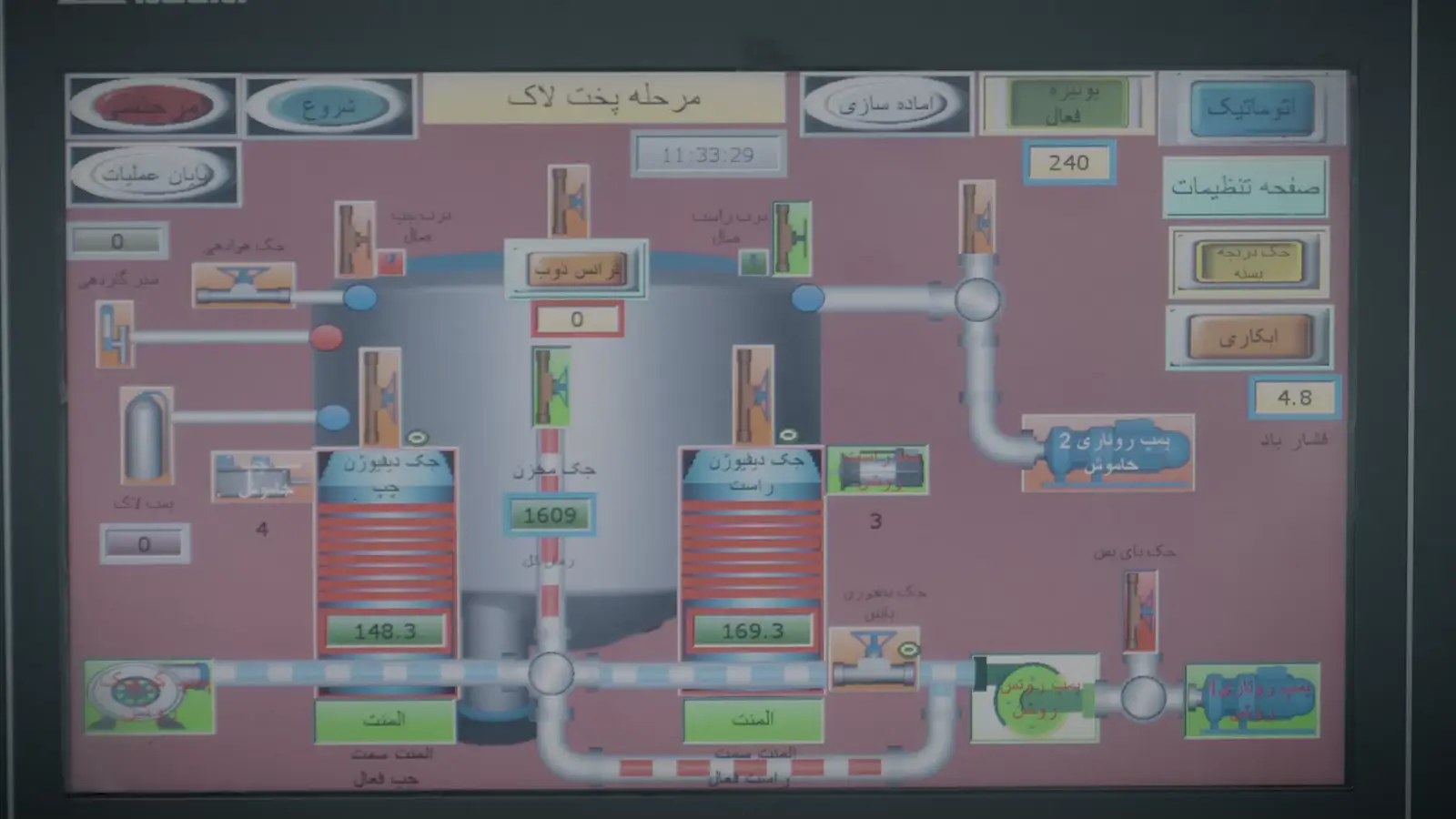
We run an integrated set of coating, surface preparation, metallization, testing, and process engineering technologies for producing automotive lighting parts and assemblies.
The scope covers base coating, hard coating, and anti-fog coating, as well as vacuum metallization, which includes vacuum aluminium metallization and PVD.
Depending on the product and process, coating takes place in controlled environments and cleanrooms built to ISO 14644, at the required cleanliness classes, including ISO Class 7. Alongside production, a specialist laboratory with ISO/IEC 17025 certification tests the quality, performance, and durability of coatings and metallized layers.
Integrated processes, automation, robotics, and controlled transfer of parts between stages reduce manual handling, improve repeatability, and protect quality along the coating and metallization chain. The lines and equipment are designed, built, integrated, and commissioned in-house by our own engineers to suit each process and product.
01 / 05
Base Coating
- Substrates
- BMCDie-cast metalPlastics and engineering plastics
- Curing
- UVThermal
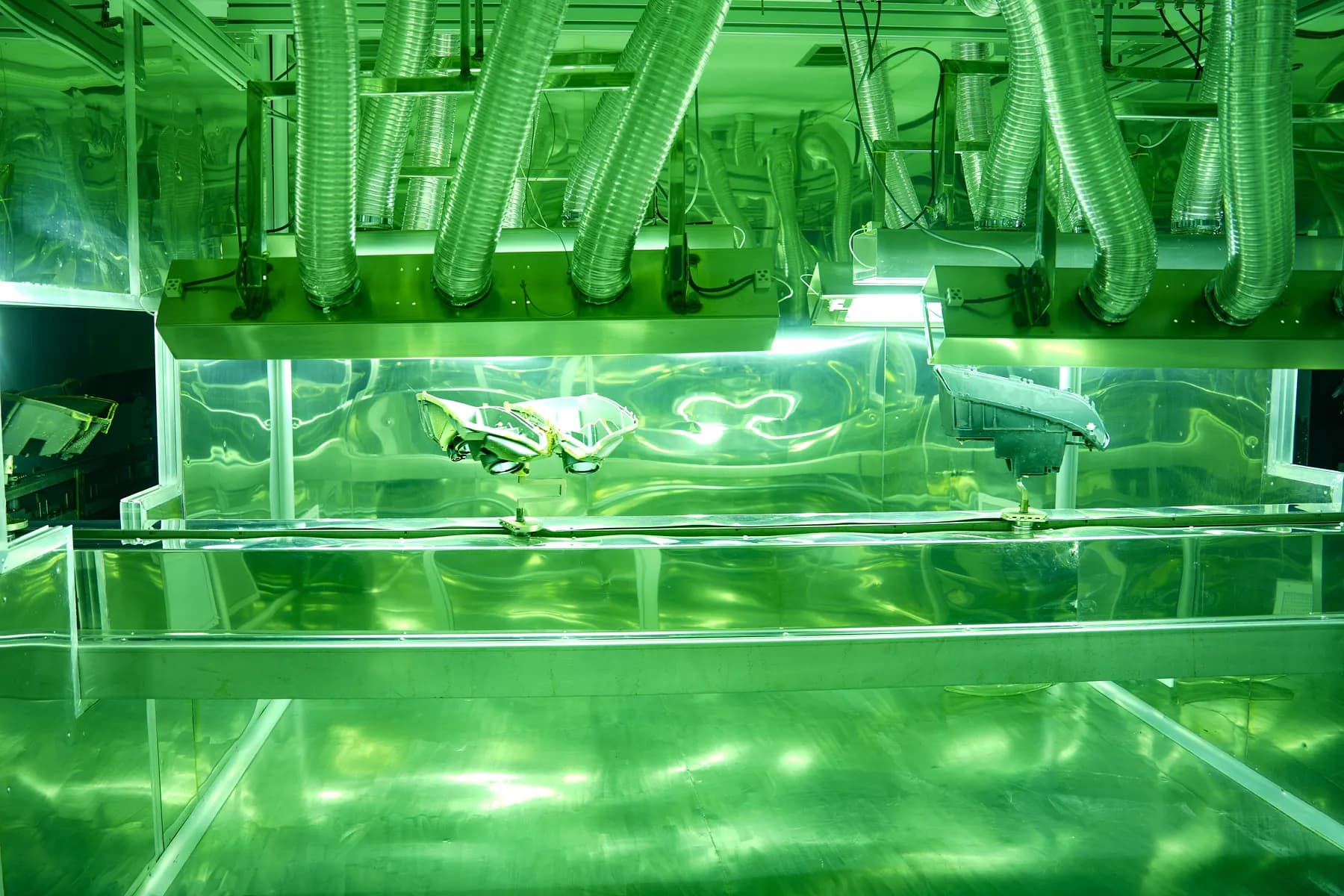
We run a range of base coating systems for the many parts and substrates used in automotive lighting.
Base coat is applied to BMC parts, die-cast metal parts, and plastic and engineering plastic parts. The coating system and preparation method are chosen to suit the substrate, its surface, adhesion requirements, and the part's final use.
For reflectors, the process runs in-line from injection moulding. After the part leaves the mould, the reflector is washed and its surface prepared and activated before lacquer is applied. Coating is applied on index tables with automatic spray systems, and transfer robots move parts between stations to reduce reliance on manual work.
After flash-off and curing, parts move in-line to the next process where needed, such as vacuum metallization. This connected chain cuts handling and helps keep process conditions and part quality stable.
UV and thermal curing are both available, depending on the coating system, and production runs in controlled environments and cleanrooms as the product and process require.
Base coating lines and equipment are designed and built in-house for each process and product.
Reflector line, in-line from injection
- 01Injection moulding
- 02Washing
- 03Surface preparation and activation
- 04Automatic spray on index tables
- 05Flash-off
- 06UV or thermal curing
- 07Vacuum metallization
02 / 05
Hard Coating
- Protects against
- ScratchesAbrasionWeatheringChemicals
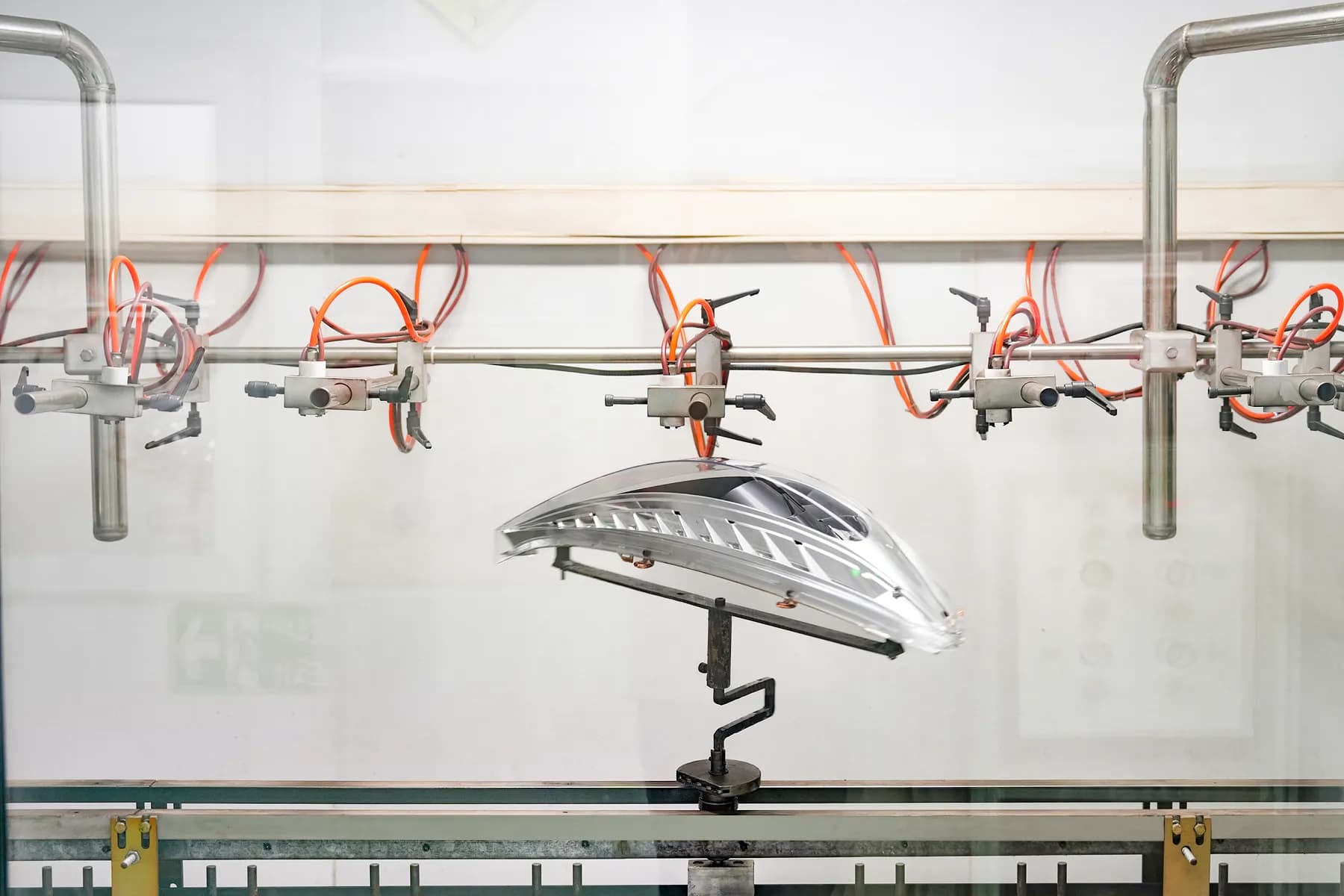
Hard coating makes part surfaces more resistant to scratches, abrasion, weathering, and chemicals, and keeps their appearance and function intact.
For optical parts, we run an in-line chain from injection moulding through thermal and surface preparation to hard coating. After moulding and annealing, parts go through cleaning, ionization, and surface activation, then are automatically sprayed, flashed off, and UV cured.
Automatic and robotic systems with controlled transfer between stations reduce manual handling and give a stable, even, and repeatable process.
Production takes place in controlled environments and cleanrooms as the product requires, and we can develop and optimise process parameters and integrate automatic and robotic systems.
Hard coating lines and equipment are designed, built, and integrated in-house by our own engineers.
Optical parts, in-line
- 01Injection moulding
- 02Annealing
- 03Cleaning
- 04Ionization
- 05Surface activation
- 06Automatic spray
- 07Flash-off
- 08UV curing
03 / 05
Anti-Fog Coating
- Equipment
- Mixing and dosing systemsIndex tablesAutomatic oven transfer
Anti-fog coating reduces condensation and keeps the inside of lamp lenses clear across different temperatures and humidity levels.
The process is highly automated and links injection moulding and part preparation to coating and curing in one chain.
After surface preparation and ionization, parts move automatically to an index table, where they are sprayed using mixing and dosing systems and automatic equipment.
Transfer from the index table to the oven, from the oven to the inspection station, and on to packing is also automatic, keeping manual handling to a minimum and the process continuous.
Flash-off and thermal curing take place under controlled conditions, and the whole chain runs in controlled environments and cleanrooms as the product and process require.
Anti-fog lines and equipment are designed and built in-house for each product and process.
Anti-fog line
- 01Injection moulding
- 02Surface preparation
- 03Ionization
- 04Spray on index table
- 05Flash-off
- 06Thermal curing
- 07Inspection
- 08Packing
04 / 05
Vacuum Plating and Metallization
- Technologies
- Vacuum aluminium metallizationPVD
Vacuum metallization produces highly reflective metal surfaces with the appearance and optical properties automotive lighting parts need.
The area covers two main technologies: vacuum aluminium metallization and PVD.
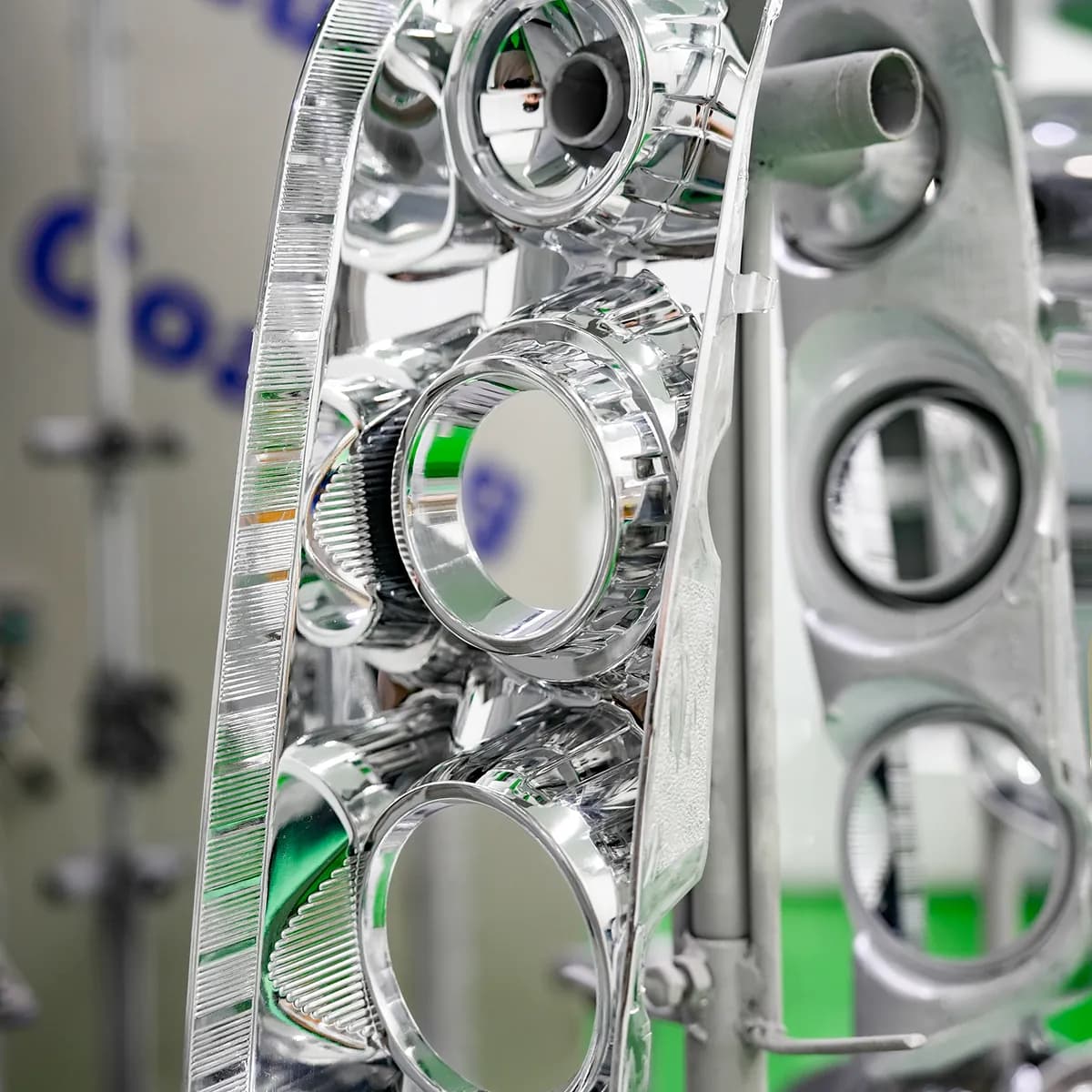
4.1
Vacuum Aluminium Metallization
For parts that need metallizing, we run an in-line chain from injection moulding and part preparation through to metallization.
After moulding and annealing, parts move to plating in a controlled way, without unnecessary handling.
Aluminium is deposited by thermal evaporation under controlled vacuum, and the process is completed with surface preparation, plasma treatment, and a protective top coat.
A key requirement is a stable, fault-free vacuum system, so monitoring vacuum conditions and confirming that process conditions are met is central to metallization control.
Metallization takes place in controlled environments and cleanrooms as the product and process require, giving even layers, good surface quality, and a stable process.
Vacuum aluminium metallization machines and systems are designed, built, localised, and commissioned in-house to suit each process.
Metallization chain
- 01Injection moulding
- 02Annealing
- 03Surface preparation
- 04Plasma treatment
- 05Aluminium thermal evaporation
- 06Protective top coat
4.2
PVD Technologies
PVD (physical vapour deposition) produces thin, engineered layers with a range of functional, visual, and surface properties on many kinds of parts and substrates.
Our PVD capability covers sputtering, plasma processes, and thin-film deposition, and can apply a range of metallic and compound layers, including chromium (Cr), titanium (Ti), chromium nitride (CrN), and other engineered compositions.
By choosing and combining coating materials, process gases, and deposition parameters, we can produce a range of colours, metallic effects, and engineered coatings to meet a product's visual and functional requirements.
Deposition works on many substrates, including metals, glass, ceramics, and a wide range of engineering plastics. The coating system and process are chosen and developed around the substrate and the product's functional and visual requirements.
Process control allows very thin, even layers, so in sensitive applications the grain and texture of the substrate are preserved as far as possible and the part keeps its original look after coating.
PVD runs in controlled environments and cleanrooms as the process and product require. Key deposition parameters and conditions are monitored so the layer's structure, thickness, uniformity, and surface properties meet the product's technical requirements.
PVD machines are designed, built, localised, commissioned, and optimised in-house, and we can develop dedicated systems for specific substrates, coating materials, and product requirements.
- Processes
- SputteringPlasma processesThin-film deposition
- Layers
- CrTiCrNEngineered compounds
- Substrates
- MetalGlassCeramicEngineering plastics
05 / 05
Coating Laboratory and Quality Control
- In-process
- ViscosityUV intensity and doseCoating thicknessAdhesionPart stress
- Finished product
- ChippingScratchChemicalHeat and humidityPhotometryReflectance
- Specialist
- Anti-fog, wettability, contact angleImmersion test (top coat)
- Standards
- ISO 14644 (Class 7)ISO/IEC 17025
Quality control in coating starts with validating and commissioning lines and equipment, continues with in-process control, and ends with performance and durability evaluation of the finished product. Our specialist laboratory holds ISO/IEC 17025 certification and is equipped to evaluate materials, processes, and products.
When validating equipment, we check how process and thermal systems perform and confirm the temperature uniformity of ovens and heated zones with profiling and measuring equipment.
During production, parameters that affect coating quality are checked, including viscosity, UV intensity and dose, coating thickness, adhesion, and part stress, to keep the process stable and parts consistent.
Finished products undergo performance and durability tests suited to the coating and its use, including resistance to chipping, scratches, chemicals, heat, and humidity, as well as optical tests such as photometry, light intensity and distribution, and reflectance.
Anti-fog coatings get specialist tests for anti-fog performance, wettability, and contact angle.
For metallized parts, an immersion test validates the protective top coat and how well it shields the metal layer from the environment.
Other performance, durability, and environmental tests follow the test plan, product specification, and customer requirements. Together this supports process validation, in-process control, and final approval of coatings and metallized layers.
Quality stages
- 01Line and equipment validation
- 02In-process control
- 03Finished product testing
Business Inquiry
Discuss this manufacturing capability
Contact Modern Group to talk through process requirements, capacity, or tooling.