
Manufacturing Technology
Plastic Injection
Injection moulding, BMC, materials engineering, tooling, and laboratory testing.
Overview
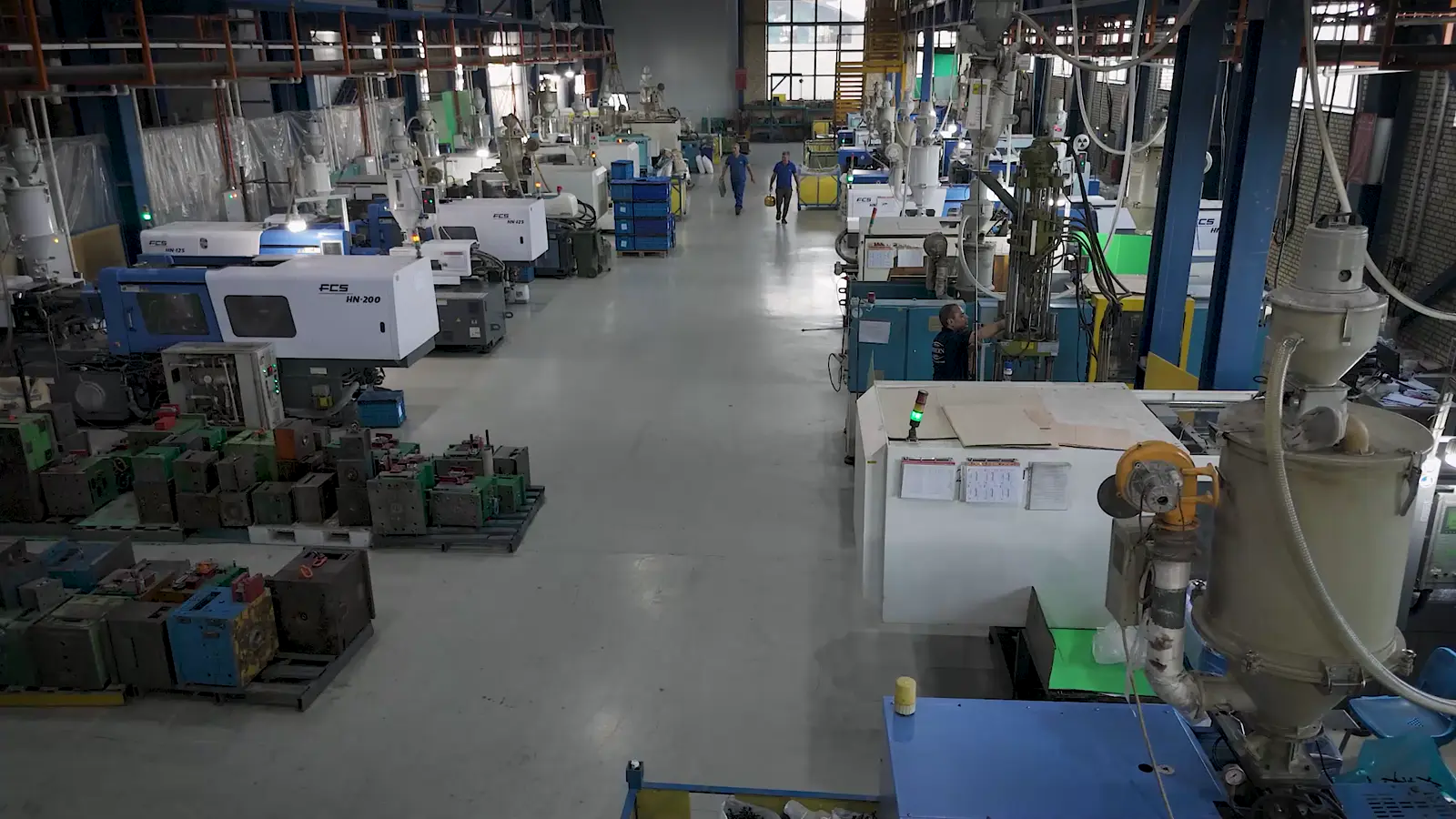
Our plastic injection and polymer processing capability brings together injection technologies, materials engineering and compounding, BMC, rubber injection, mould and tool making, automation and robotics, digital process monitoring, and materials and part testing.
The injection plant has all the machinery and technology needed to produce parts for automotive lighting systems, from small, complex precision components to large functional parts. It processes a wide range of engineering and polymer materials and uses a variety of injection technologies to meet the different requirements of lighting products.
01 / 07
Injection Moulding Processes
- Injection
- Single-, two-, and three-colourSocket mouldingVertical pressesRubber injection
- Optical parts
- Cleanroom lens and bezel mouldingMatte cover lensesLight guide lenses
- Finishing
- Cooling jigsLaser gate cutting
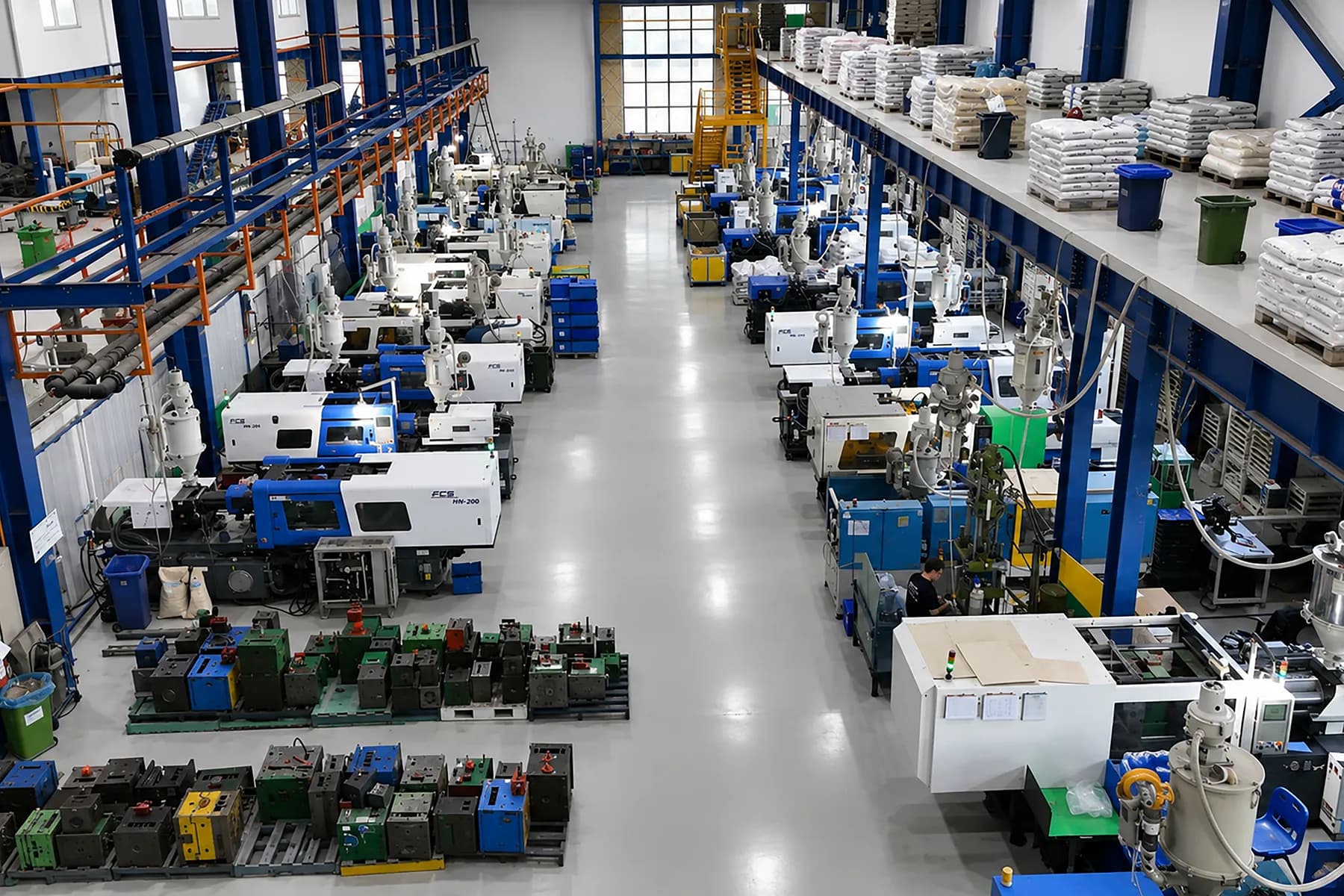
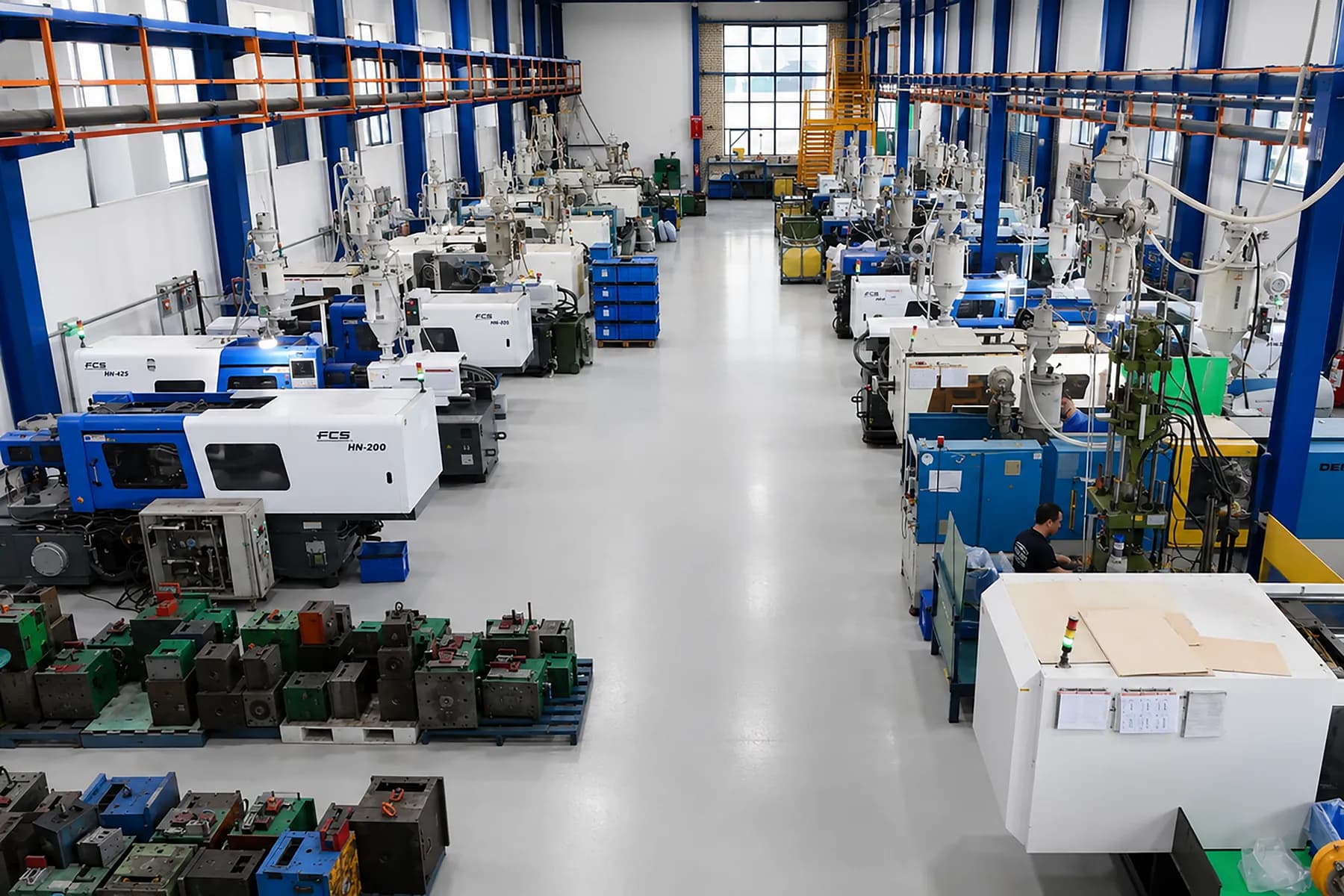
Our injection capability covers the range of technologies and applications the automotive lighting industry needs. It includes single-, two-, and three-colour injection and the processing of many engineering and polymer materials, so we can produce parts with complex geometry, tight dimensional and functional requirements, and varying levels of complexity.
Alongside general injection moulding, we have dedicated equipment and processes for moulding socket parts, as well as vertical presses. This range lets us meet the needs of the different parts and sub-assemblies in a lighting system.
A specialist capability of this unit is moulding lenses and bezels in cleanrooms. This covers optical parts such as matte cover lenses and light guide lenses. Where needed, lenses and bezels move in-line to finishing processes such as hard coating and metallization, which keeps the production chain connected and reduces handling of sensitive parts.
To finish parts and keep quality repeatable, we also use specialised techniques such as cooling jigs and laser gate cutting.
Our polymer processing is not limited to thermoplastics and BMC. Rubber injection and rubber part production are also done in-house, completing the range of polymer parts we make for automotive lighting systems.
Further along the chain, we produce some of our own protective packaging, including plastic film, bubble wrap, and corrugated plastic board, used to protect, pack, and move parts.
02 / 07
BMC Injection and Engineering
BMC is one of our specialist, fully integrated areas of materials engineering and thermoset processing. The work runs from designing and developing BMC formulations to producing BMC compound in-house, preparing it, and moulding parts.
Keeping every step in-house lets us develop and optimise formulations for each product and process, and gives better control over how material properties affect the injection process.
BMC injection is used to make reflectors and other thermoset parts, linking materials engineering, material production, and moulding in one in-house chain.
In-house BMC chain
- 01Formulation design
- 02Compound production
- 03Material preparation
- 04Injection moulding
- 05Reflectors and thermoset parts
03 / 07
Materials Engineering and Compounding
- Scope
- Material preparationCompoundingFormulation developmentApplication-specific optimisation
Materials engineering is a core part of our injection infrastructure, covering the engineering, thermoplastic, thermoset, and polymer compounds used in automotive lighting.
The work includes material preparation, compounding, formulation development and modification, and optimising materials for each part's application and process conditions. Because materials engineering sits close to the injection process, we can study how materials behave, develop new solutions, and give technical support to products and production.
In-house formulation capability, especially for BMC, has let us move from buying ready-made materials to engineering materials around the needs of the product and the process.
04 / 07
Process Automation and Robotics
- Equipment
- Three-axis robotsPart removal and transferAutomatic part washingInter-stage transfer
Automation and robotics are built into our injection production to raise productivity, repeatability, handling accuracy, and process stability in each production cell.
Most injection machines are fitted with three-axis robots and related automatic equipment that take care of part removal and transfer, handling, automatic part washing, and movement between process stages.
This lets us build automatic production cells matched to each part, production volume, and process requirement, which does much to keep quality and productivity steady.
05 / 07
Process Monitoring and Digitalisation
- Tracked online
- Key process parametersOutput and good partsScrapStoppagesSPC
Our digital production system monitors the process and actual output online and makes process and production data available for engineering analysis and decisions.
Besides key process parameters, it records output, good parts, scrap, and production stoppages online. Stoppage data is used to analyse performance and find room for improvement.
Online SPC (statistical process control) tracks trends in key parameters and flags variation and process drift.
Combining process and production data supports continuous improvement of cycle time, part weight, scrap, energy use, and process stability, and moves us towards data-driven production.
06 / 07
Mould Making, Tooling, and Maintenance
- Machining
- CNCWire cutEDM / spark erosionTurningSpotting presses
- Repair
- Argon weldingCO₂ weldingCold weldingPrecision measurement
- Also built in-house
- Jigs and fixturesChecking fixturesProduction tools
Our in-house mould capability covers the full cycle of design, manufacture, commissioning, maintenance, repair, and modification, and is one of the main supports of the injection process.
A specialist mould and tool design team designs and develops the moulds and tools production needs. For manufacture and machining, the in-house workshop has CNC machines, wire cut and EDM (spark erosion) machines, lathes, specialised drills, and spotting presses.
To repair, modify, and rebuild moulds we use specialist welding and repair methods, including argon, CO₂, and cold welding. Precision measuring equipment is used to check mould and tool geometry.
A dedicated mould maintenance team supports the maintenance cycle, and a mould polishing team handles surface quality and preparation.
Beyond moulds, the workshop builds jigs and fixtures, dimensional checking fixtures, and other tools and equipment for production, giving direct support to product development, process changes, and part geometry control.
07 / 07
Quality Control and Laboratory
- Material
- MFIDSCAsh and impurity
- Mechanical
- TensileHardnessImpact (ambient and cold)CharpyIzodAbrasion and rub
- Thermal
- HDTVicatHeat and humidity
- Standards
- ISO/IEC 17025IATF 16949
Our quality control and laboratory unit has specialist capability to evaluate raw materials, control the process, and test the properties and performance of polymer and rubber parts.
For material properties and identification, tests include MFI, DSC, and impurity and ash content measured in a furnace. These are used to evaluate raw materials and check them against technical requirements.
For mechanical and functional properties, we run tensile tests, plastic and rubber hardness tests, impact tests at ambient and low temperature, and Charpy and Izod tests. Abrasion and rub tests assess the wear resistance and durability of materials and parts.
Thermal behaviour is assessed with HDT and Vicat tests, along with heat and humidity tests.
These tests are used in raw material approval, product development, process validation, production control, failure analysis, and continuous improvement, and they tie directly into materials engineering and the injection process.
Laboratory work follows ISO/IEC 17025, and the quality management system is organised to IATF 16949. The group also works within its technical cooperation with the Iranian National Standards Organization.
In Summary
Together, these capabilities form one chain from materials engineering and mould making through injection, automation, digital monitoring, and quality testing. That chain is the base for stable, dependable production of the polymer and rubber parts used in automotive lighting systems.
Business Inquiry
Discuss this manufacturing capability
Contact Modern Group to talk through process requirements, capacity, or tooling.