Manufacturing Technology
Product Line Automation
Assembly lines, bonding, welding, testing, and traceability for automotive lamps.
Overview
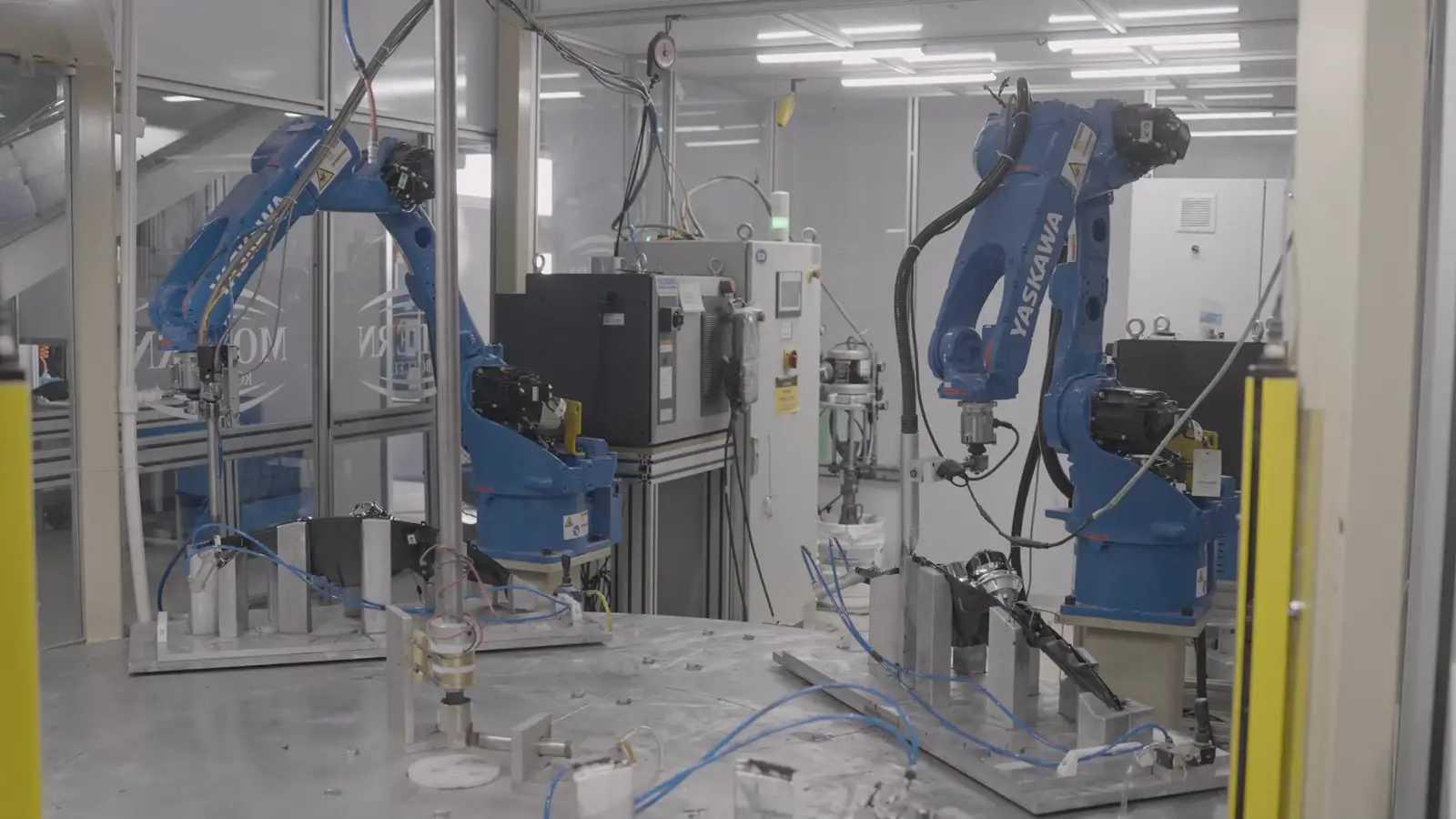
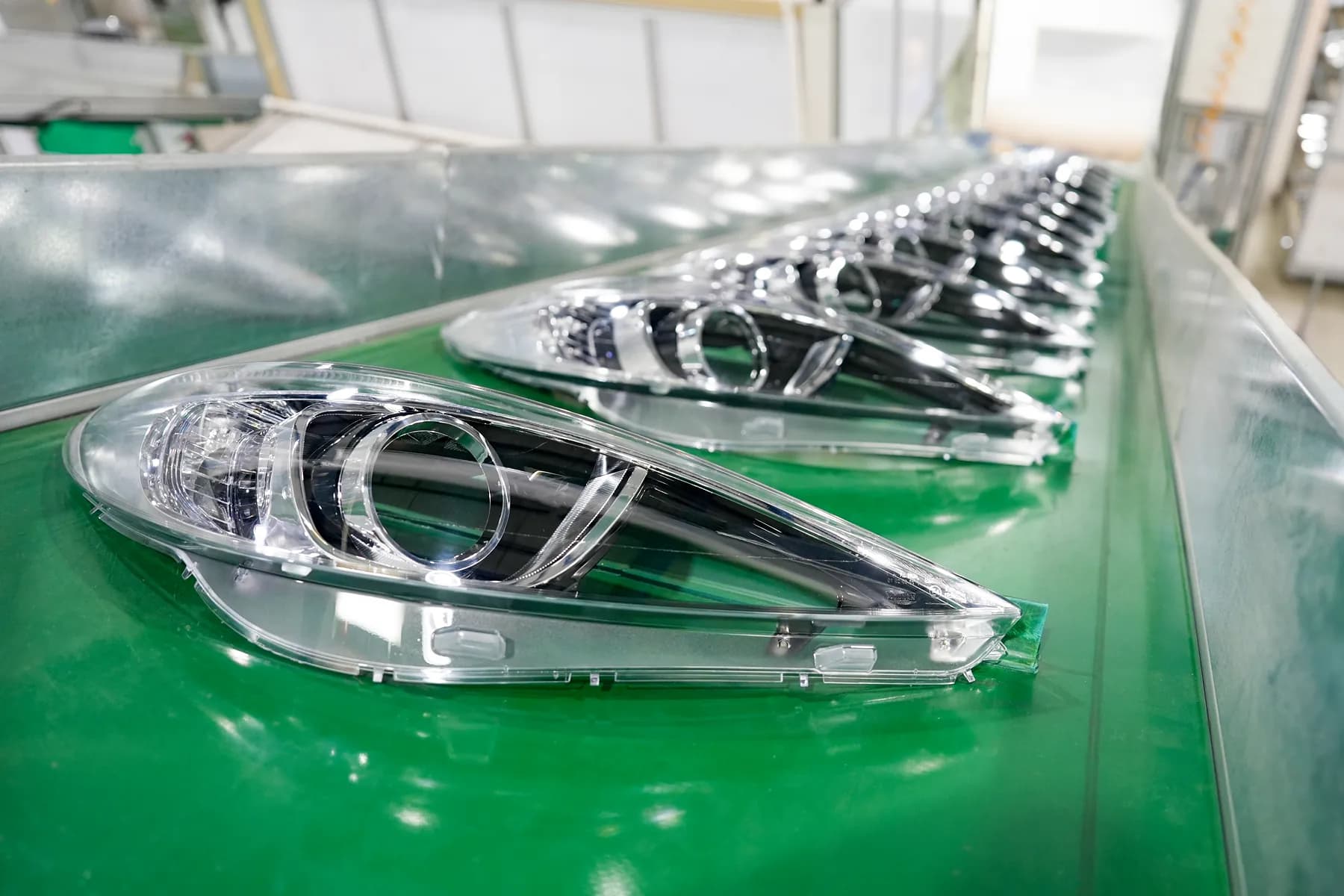
Our assembly capability brings together specialist technologies and lines for producing a wide range of automotive lighting systems. It covers automatic and semi-automatic lines and stations for different product families, from headlamps and fog lamps to rear and tail lamps and daytime running lights.
The lines have been developed for different lamp architectures and technologies, from halogen to LED and full LED, and cover joining, sealing, optical part assembly, aim adjustment, testing, and product traceability in one connected chain.
01 / 07
Assembly Lines and Product Technologies
- Product families
- HeadlampsFront and rear fog lampsRear and tail lampsDRL
- Architectures
- HalogenLEDFull LED
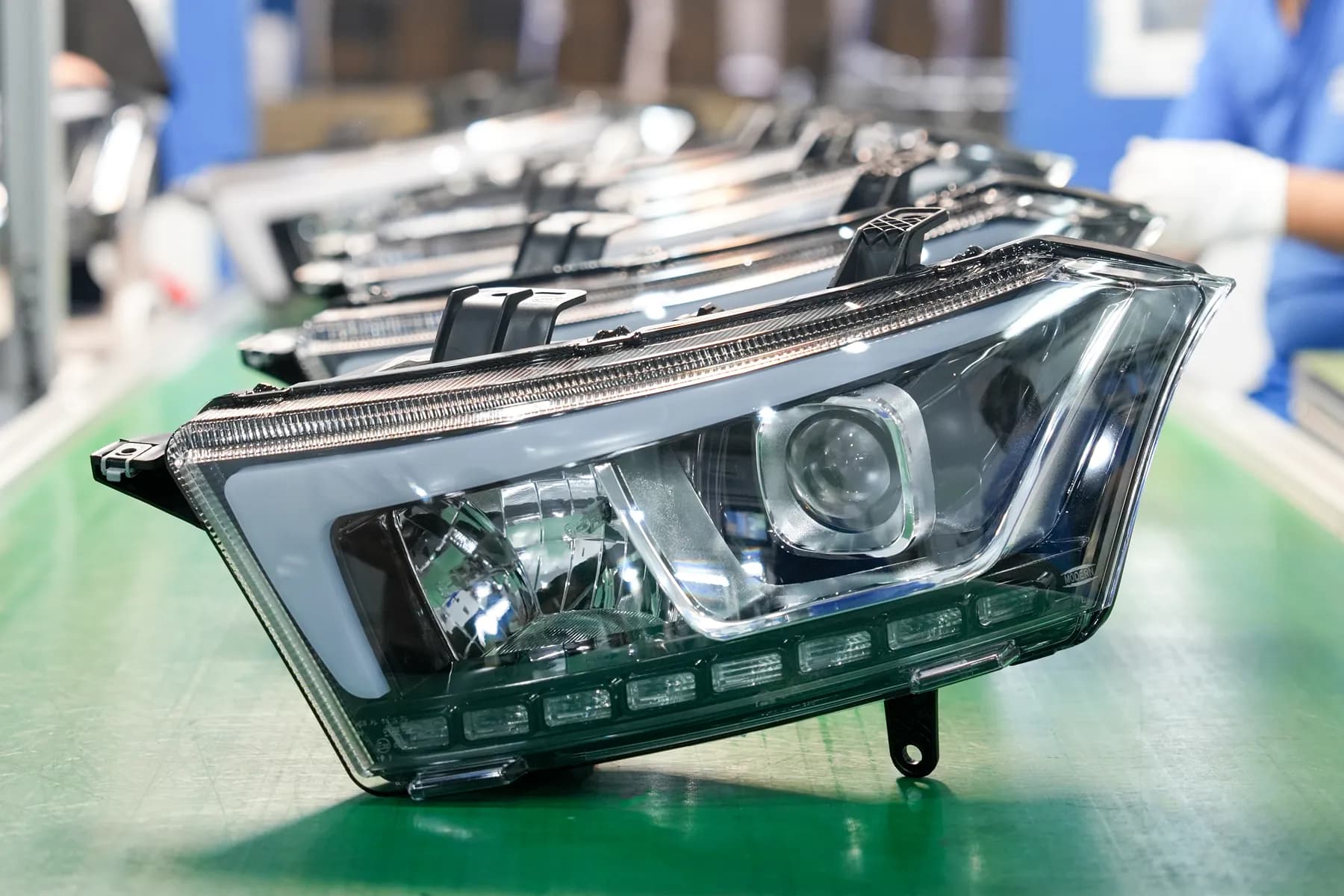
Assembly is organised into specialist line groups for the different families of automotive lighting: headlamps, front and rear fog lamps, rear and tail lamps, daytime running lights (DRL), and other lighting assemblies.
The lines are built for halogen, LED, and full LED lamp architectures, so the assembly process can follow the structure, technology, and requirements of each product.
Lines and stations are designed around the product type, production volume, cycle time, and level of automation required, combining automatic and semi-automatic stations with controlled manual operations.
02 / 07
Adhesive Bonding and Surface Preparation
- Adhesives
- SiliconePU (made in-house)PUR2K with mixing and dosing
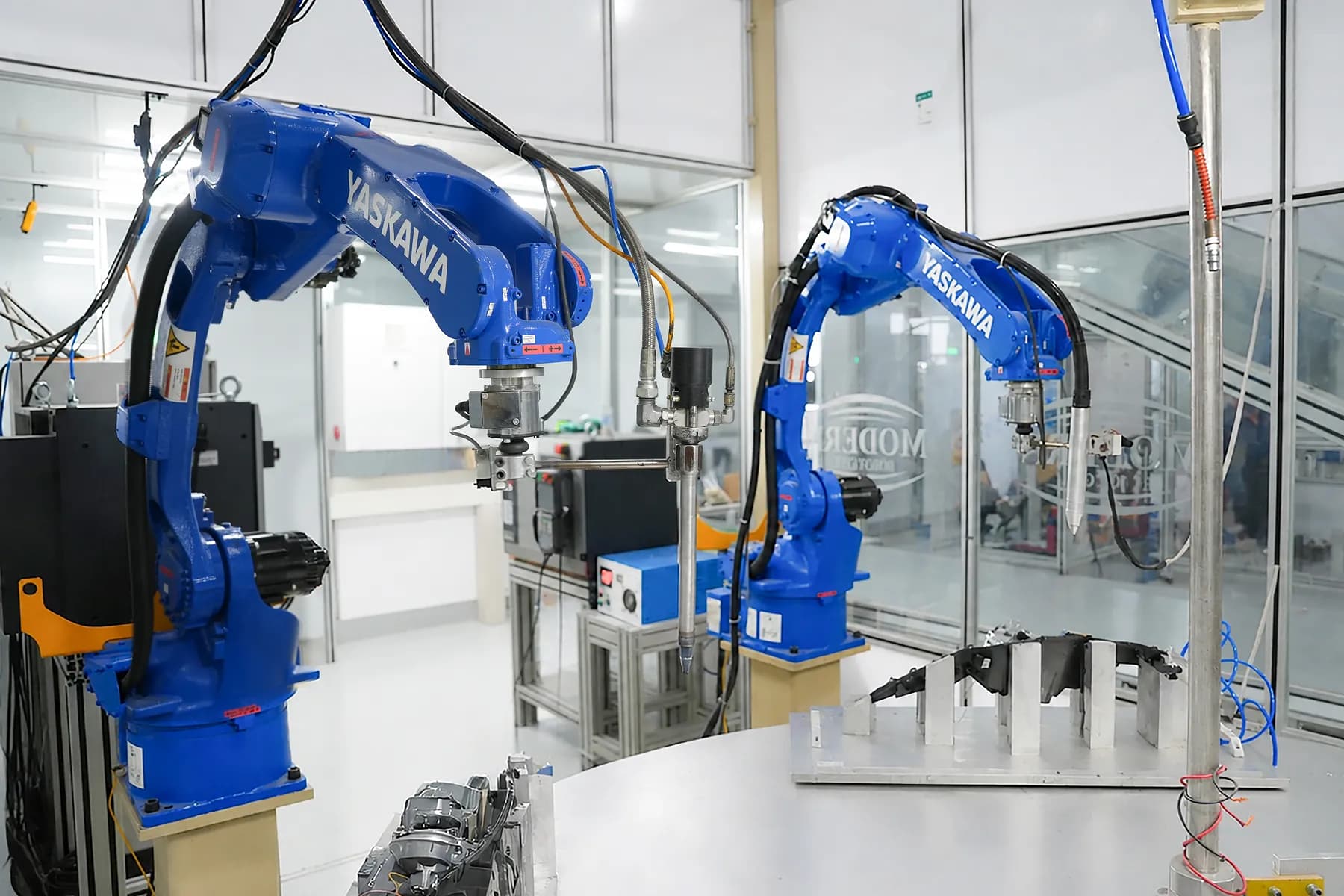
Adhesive bonding and surface preparation are a core part of our assembly capability. The lines have specialist stations for automatic adhesive dispensing, plasma surface activation, and lens assembly.
We work with a range of adhesive systems, including silicone, PU, PUR, and others suited to the application. Two-component (2K) adhesives are handled on dedicated equipment with mixing and dosing systems, using nitrogen to keep the adhesive in the right condition for storage and processing.
Beyond using adhesives, we also develop and formulate specialist adhesives for lamp assembly, and our PU adhesive is now produced in-house.
After dispensing, the adhesive is cured and dried under controlled heat to give the joint its strength, seal, and stability.
Sensitive steps, especially the assembly of optical parts and lenses, take place in controlled environments and cleanrooms as cleanliness and product requirements dictate.
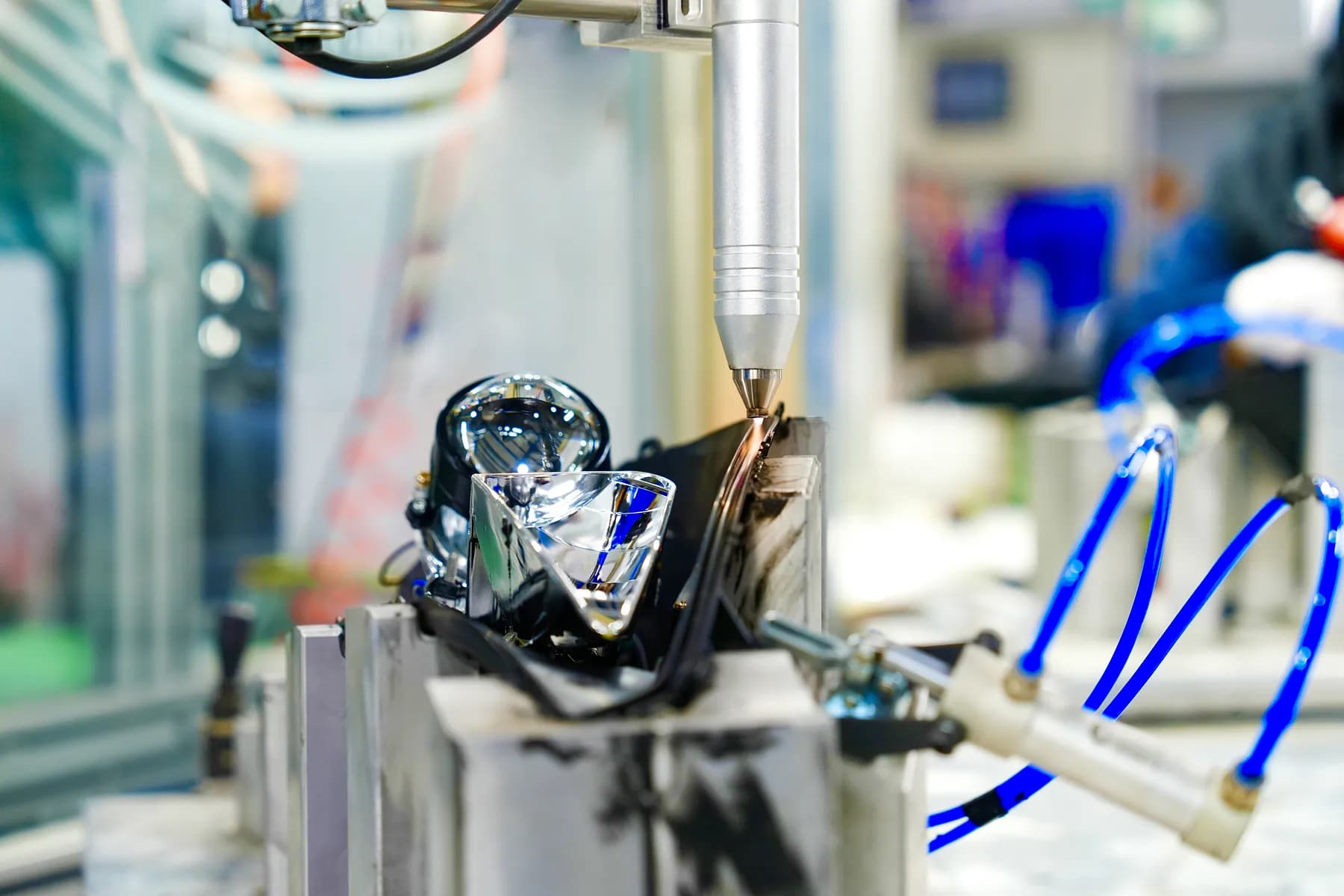
Bonding sequence
- 01Plasma surface activation
- 02Automatic adhesive dispensing
- 03Lens assembly
- 04Controlled heat curing
03 / 07
Plastic Welding
- In use
- Vibration weldingUltrasonic weldingHot plate weldingThermal annealing / stress relief
- Built in-house
- Hot plate machinesHot plate tooling
- Ready to develop
- Laser welding
To join polymer parts in lighting assemblies, we use several plastic welding technologies: vibration welding, ultrasonic welding, and hot plate welding.
Having all three lets us pick the right joining method for the material, part geometry, mechanical and sealing requirements, and product design.
In hot plate welding we do more than run the process. Our hot plate machines are designed, engineered, and built in-house, and their development, commissioning, and optimisation are done here too.
Hot plate tools and specialist parts are also designed and made in-house from engineered alloys suited to the heat, heat transfer, and part geometry involved. This lets us develop and modify equipment and tooling quickly for new products and projects.
Our engineering base is also ready to evaluate and adopt more advanced joining technologies. To support new products and future industry needs, we are prepared to develop and use laser welding and other new plastic welding and joining methods.
For parts and assemblies that need internal stress reduced, thermal annealing (stress relief) is used to achieve dimensional and functional stability.
04 / 07
Mechanical Joining and Precision Assembly
- Equipment
- Servo pressElectric pressPneumatic pressPrecision press-fitControlled screwdriving
- Controlled parameters
- ForceDisplacementTorquePositionInsertion depth
For mechanical joining and precision assembly, we use a range of screwdriving, pressing, and controlled fitting technologies to reach the positioning accuracy, joining force, torque, and repeatability each part needs.
Equipment includes servo, electric, and pneumatic presses, precision assembly presses and press-fit, controlled screwdriving, and specialised screwdriving and fastening units.
Joining is controlled on force, displacement, torque, position, and insertion depth to keep assembly quality repeatable. Depending on the product design, precision fixtures, positioning systems, and dedicated tools hold and locate parts during fitting.
05 / 07
Aim Adjustment, Function, and Leak Testing
- Stations
- Aim adjustmentOptical function checkLeak test
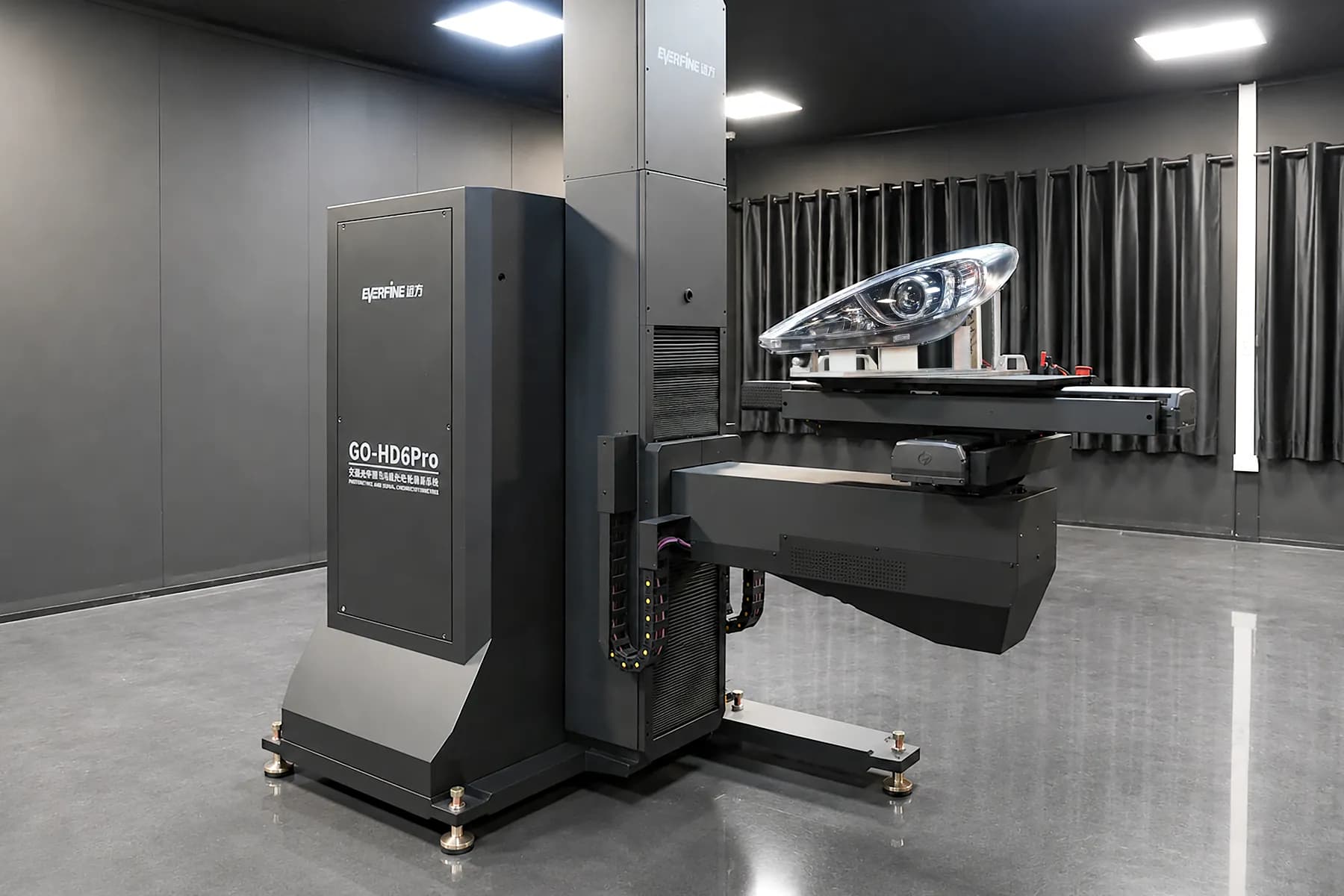
After assembly, the lines have dedicated capability for aim adjustment, optical function checks, and leak testing.
Adjustment and function stations check how the lighting system performs after assembly and confirm the lamp meets product requirements. Dedicated leak test stations check the seal and integrity of each assembly.
Placing this equipment in the production flow catches non-conformities quickly and stops faulty products moving on to the next stage.
06 / 07
Product Identification and Traceability
- Marking
- Barcode engravingProduct data engravingLink to production records
Barcode and product data engraving systems on the assembly lines identify and trace each product.
They mark each lamp with its identifier and required data and link the product to its production records, supporting traceability throughout production.
07 / 07
Quality Control, Validation, and Assembly Testing
- Fit
- Checking fixture (CF)Gap and flush
- Optical
- PhotometryIntensity and distributionColorimetry
- Durability
- Thermal and humidityVibrationDurability
- Standards
- ISO/IEC 17025IATF 16949
Assembly quality control covers line validation and commissioning, in-process inspection, 100% online leak and function testing, and final product inspection.
During validation and commissioning, we check that lines and stations work correctly and that the process meets production requirements. During production, process inspections check assembly accuracy, joints, part positions, and conformity. Leak tightness and lamp function are checked online on every unit, and the finished product gets a full inspection at the end of the line.
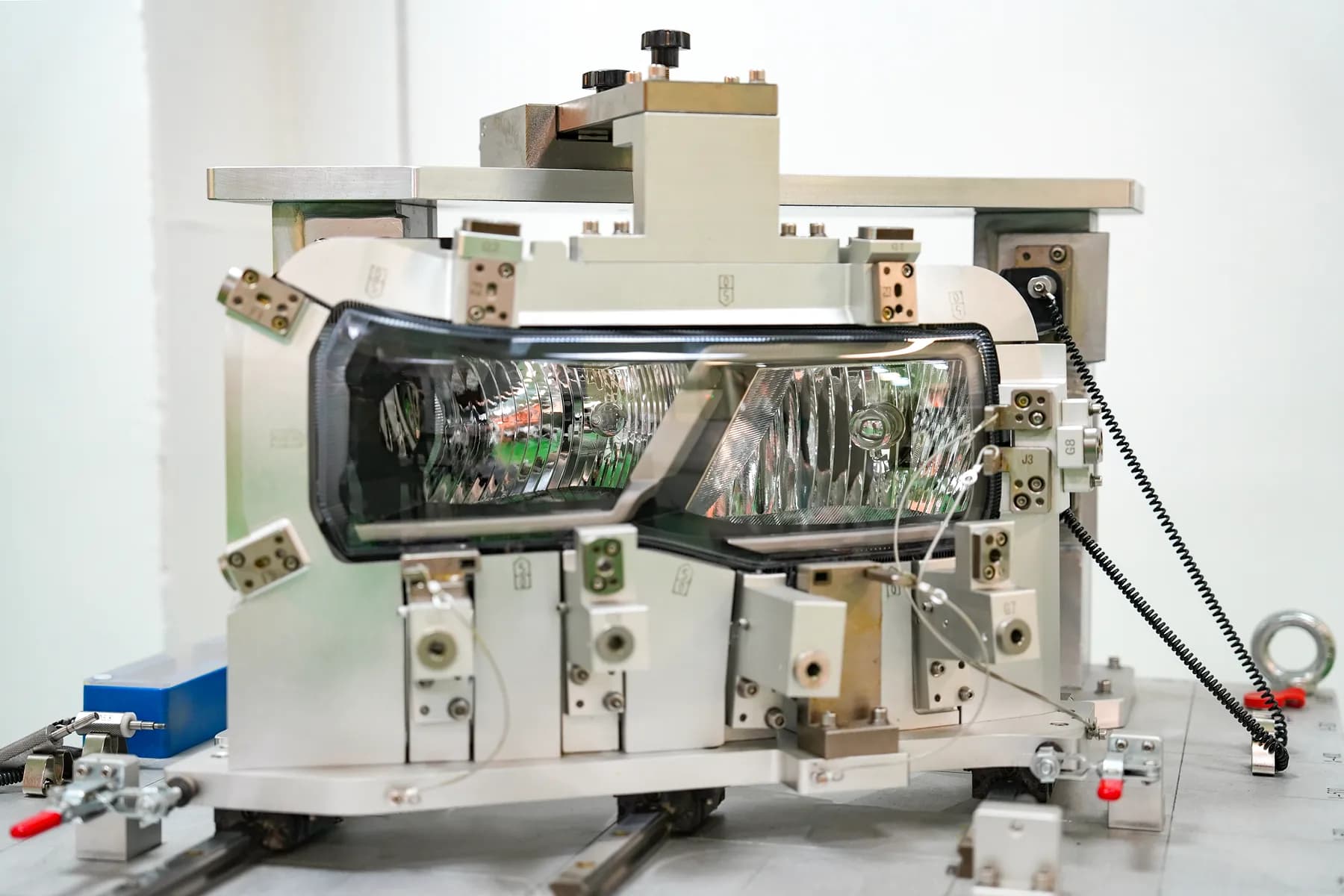
For fit, lamp mounting on the vehicle is checked with a checking fixture (CF) and gap and flush measurement, to confirm the product matches the body precisely and to assess fit and finish.
Optical performance is assessed with photometric testing, light intensity and distribution measurement, and colorimetry.
Thermal and humidity, vibration, and durability tests are also carried out, and other functional, environmental, and durability tests follow the test plan and the technical requirements of each product and project.
The laboratory and test facilities hold ISO/IEC 17025 certification, and the quality management system meets IATF 16949.
Quality stages
- 01Line validation
- 02In-process inspection
- 03100% online leak and function test
- 04Final inspection
Business Inquiry
Discuss this manufacturing capability
Contact Modern Group to talk through process requirements, capacity, or tooling.